Small-sided games: what size for what format?
The numbers behind small-sided games, format by format: pitch dimensions, length of the sets and number of repetitions, from 1 against 1 to 8 against 8.
Thibaud C. · Fitness coach · Last updated: September 26, 2026
You now know what each size of game develops. That leaves the most concrete question, the one you ask with your boots on: what dimensions, what duration, how many sets for a given format? Here is a ready-to-use calibration grid, one card per format from 1 against 1 to 8 against 8. These are ranges proven on the pitch, not laws: you sit at the bottom of the range when you want tight and intense, at the top of the range when you want volume and space.
How to read a card
- Area and dimensions: the size of the playing rectangle. The smaller it is, the more intense and duel-based the game.
- Work: the length of a playing sequence, with the ball moving.
- Recovery: the rest between two sequences, often active (walking, light jogging).
- Sets: how many times you replay the sequence.
These grids are deliberately tight: they're chasing physical intensity. Always cross them with the area per player benchmark from the previous module, which remains your compass. In the amateur game, with less well-trained players, start rather towards the top of the space range and the bottom of the duration range: you keep the quality without blowing anyone up.
The eight cards, from the duel to the big game
In increasing order of numbers — find your format and take its settings straight off the card.
1 against 1 — the pure duel

Explosiveness, changes of footing, aggression on the ball carrier. The sequences are very short: it's a format that bites hard and tires quickly, to be used in small doses.
2 against 2 — the duel with support
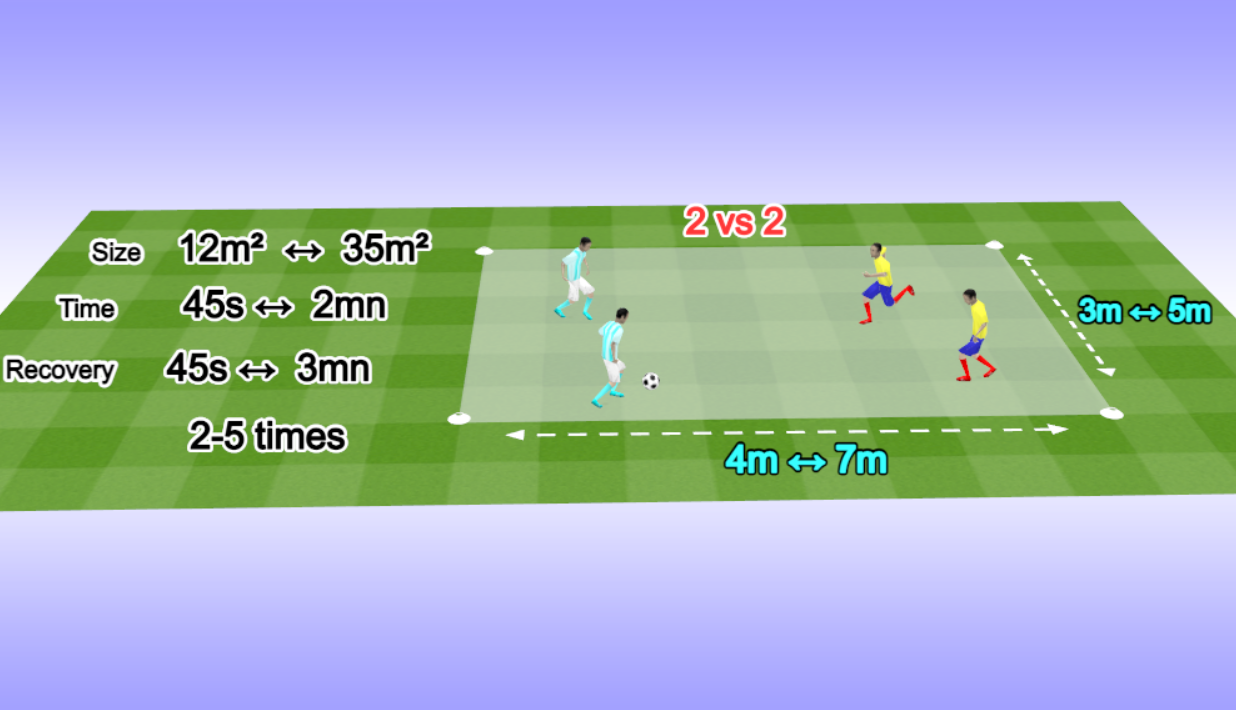
You keep the intensity of the duel but add football's first choice: keep it or give it. Ideal for repeating short efforts with constant decision-making.
3 against 3 — the technically richest format
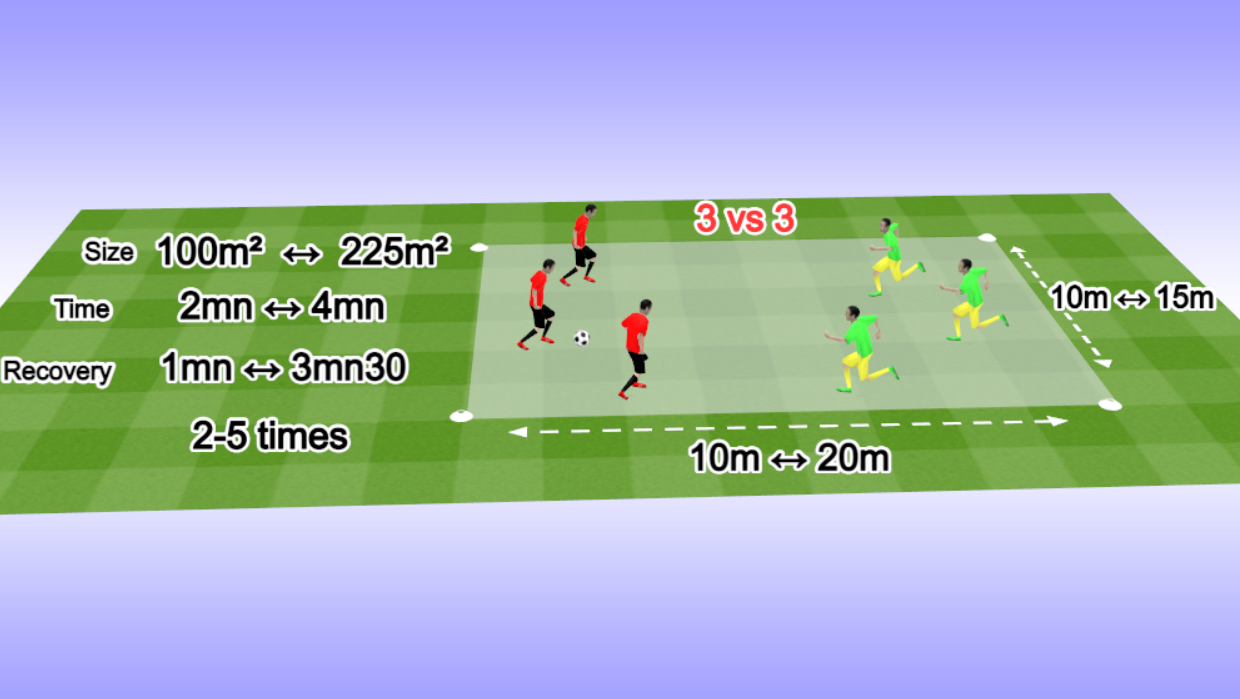
Lots of touches, lots of duels, a heart rate that climbs high. Often cited as one of the most intense formats and one of the best for technical development.
4 against 4 — the reference format
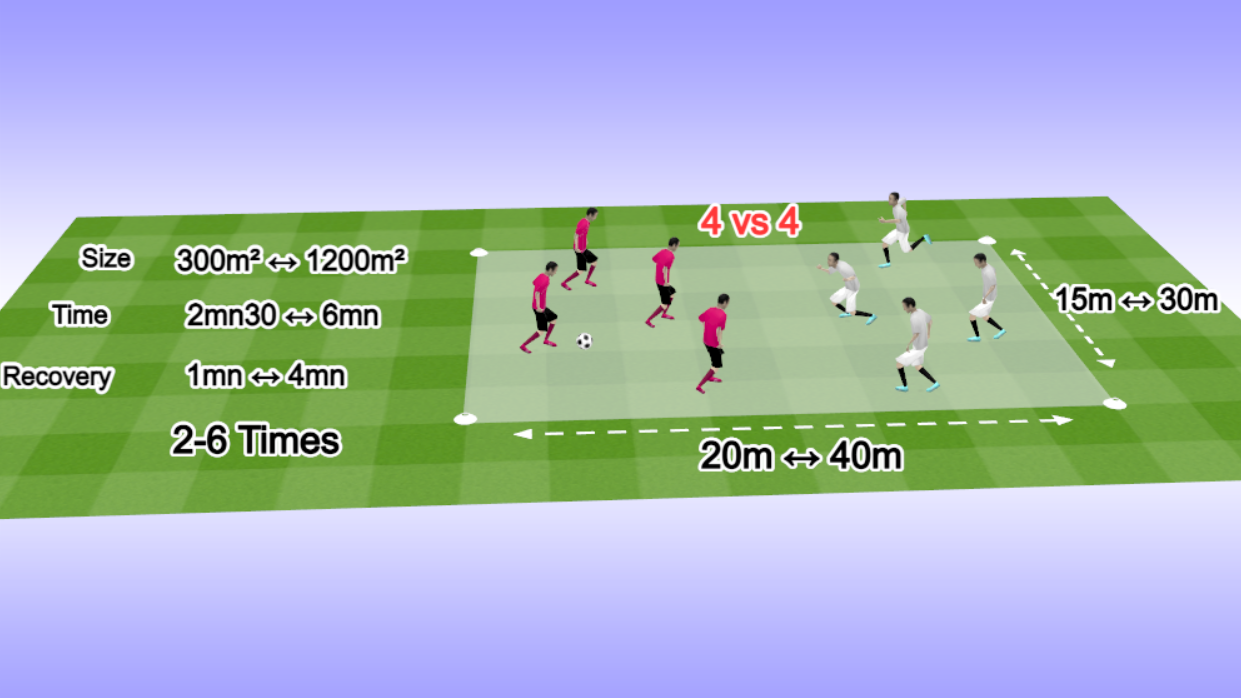
"The smallest form of a full match." A complete game, the best compromise between intensity and collective play. If you only kept one format, it would be this one.
5 against 5 — the collective takes shape
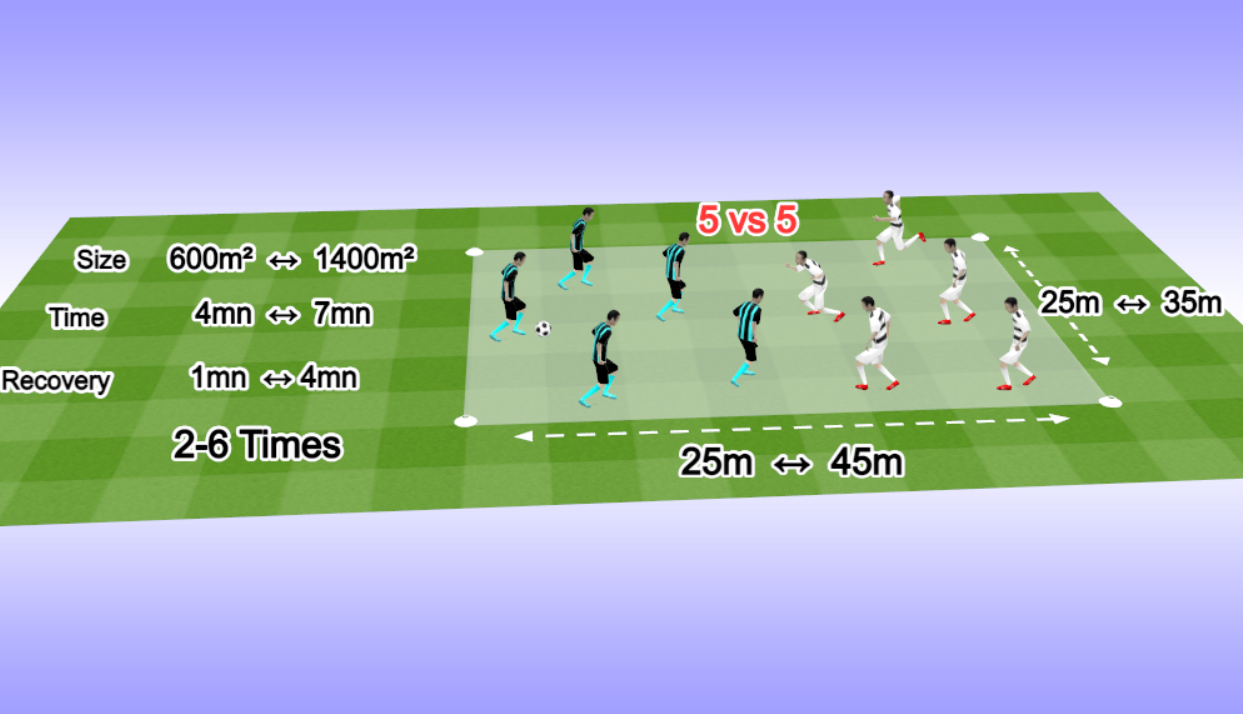
Enough players to install real possession principles, few enough to stay involved. The window for aerobic power, over longer blocks.
6 against 6 — positional play settles in
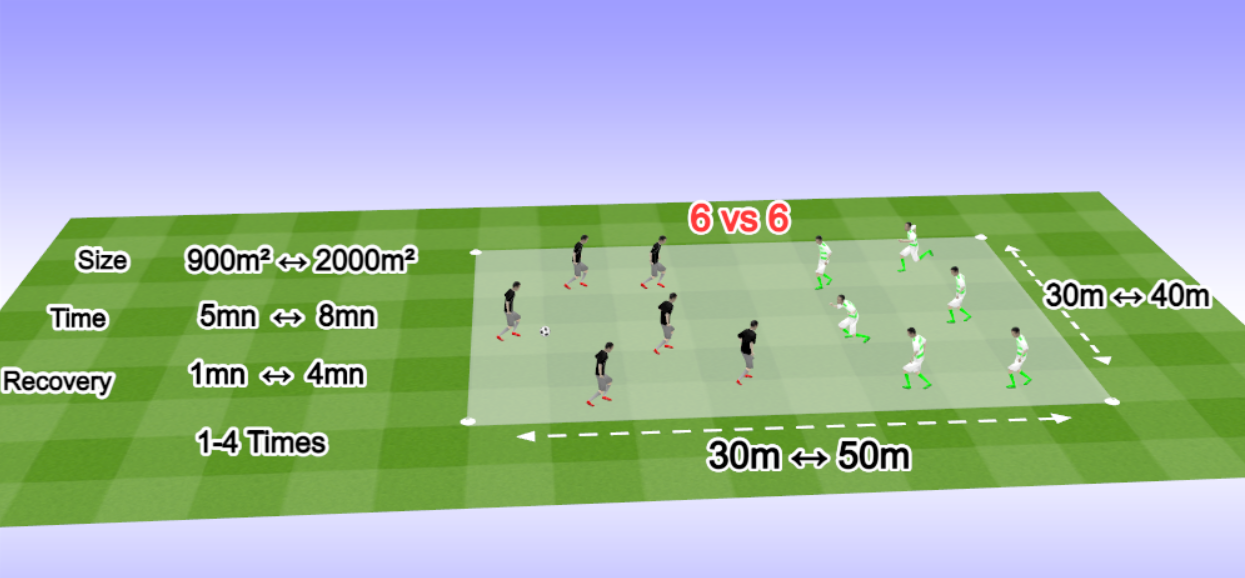
The running volume rises, the blocks get longer. You work on collective organisation and endurance in a space that starts to resemble a real pitch.
7 against 7 — the big game

Long blocks, an endurance emphasis, runs at speed. You get close to the aerobic demands of a match, with fewer touches per player but more volume.
8 against 8 and above — as close as it gets to a match
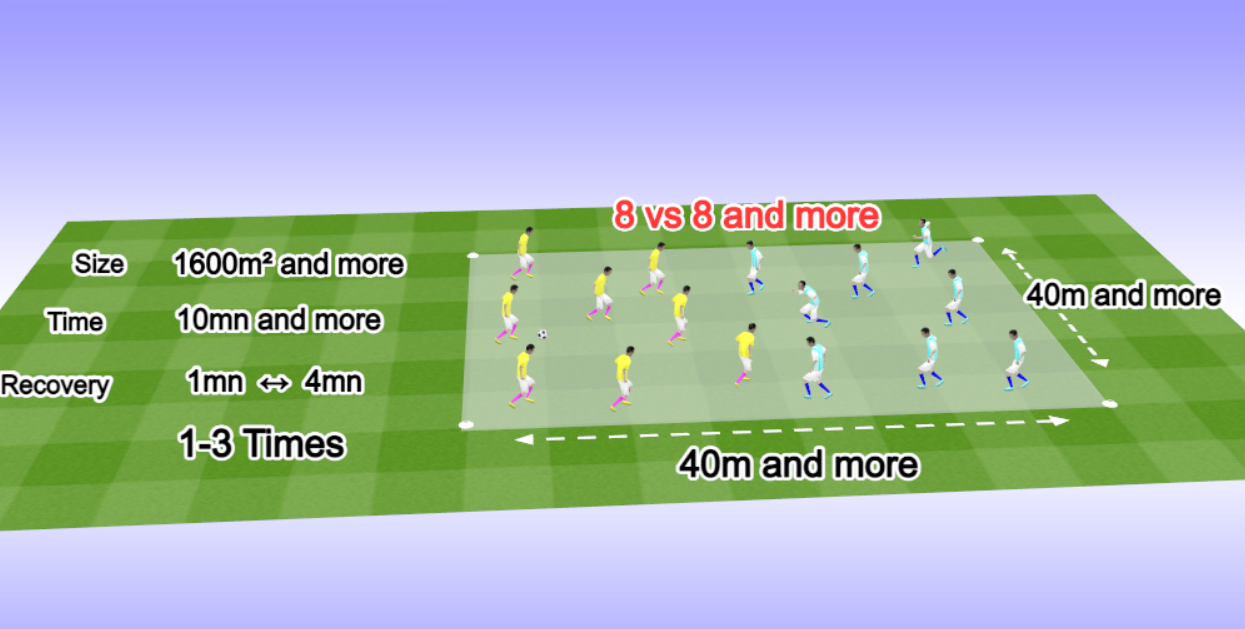
The format closest to the real game: collective patterns, managing space, volume. Save it for sessions where you want to get close to match conditions.
The grid at a glance
| Format | Dimensions | Work | Rec. | Sets |
|---|---|---|---|---|
| 1v1 | 2.5–5 × 2–5 m | 30 s–1 min 30 | 30 s–3 min 30 | 2–5 |
| 2v2 | 4–7 × 3–5 m | 45 s–2 min | 45 s–3 min | 2–5 |
| 3v3 | 10–20 × 10–15 m | 2–4 min | 1–3 min 30 | 2–5 |
| 4v4 | 20–40 × 15–30 m | 2 min 30–6 min | 1–4 min | 2–6 |
| 5v5 | 25–45 × 25–35 m | 4–7 min | 1–4 min | 2–6 |
| 6v6 | 30–50 × 30–40 m | 5–8 min | 1–4 min | 1–4 |
| 7v7 | 40–50 × 40–50 m | 8–20 min | 1–4 min | 1–3 |
| 8v8 and + | 40 m and up | 10 min and up | 1–4 min | 1–3 |
Take a mental photograph of the card for the format you're going to use before your session. You'll never have to improvise your distances again when laying out the cones, and you'll be able to adjust the intensity live just by sliding within the range.